Two OB-vans by RAI are closely engaged near the world most important bicycle race arrivals, "Giro d'Italia". One takes care of the production process for RAI Sport and one for the production of the international feed seen in 173 world nations! In fact, as per the 4 year agreement between rights owner RCS Sport and Italian national state broadcaster RAI, two different feeds are created and diffused, one international and one for the "in house" owner, RAI, for the home territory, with proper personalization.
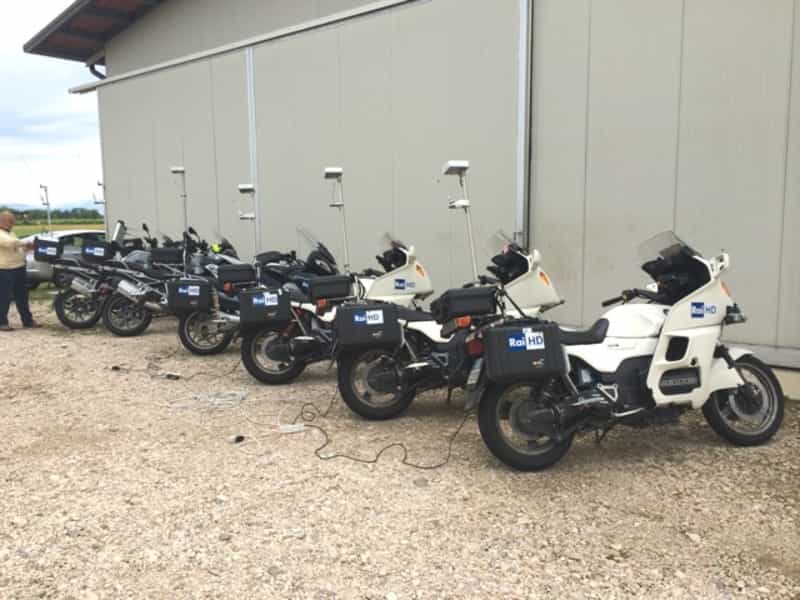
"Rome Unit 7" and "Unit Milan 2" are the two mobile units involved in the Giro d'Italia race of this year, respectively, 12 and 10 meters long, all for shooting in Full HD, placing 11 cameras on the ground and 4 motor-bikes for shooting live below the cyclists on the move, plus a motor-bike for ENG shooting and as such is in charge of the extra contributions to the news reports. Two Wescam cameras are installed on helicopter according to the same standard verified and approved in recent years previous editions.
All cameras in motion obviously work in RF, while the others are wired or in RF according to the requirements and depending on the distances that every stage must cover.
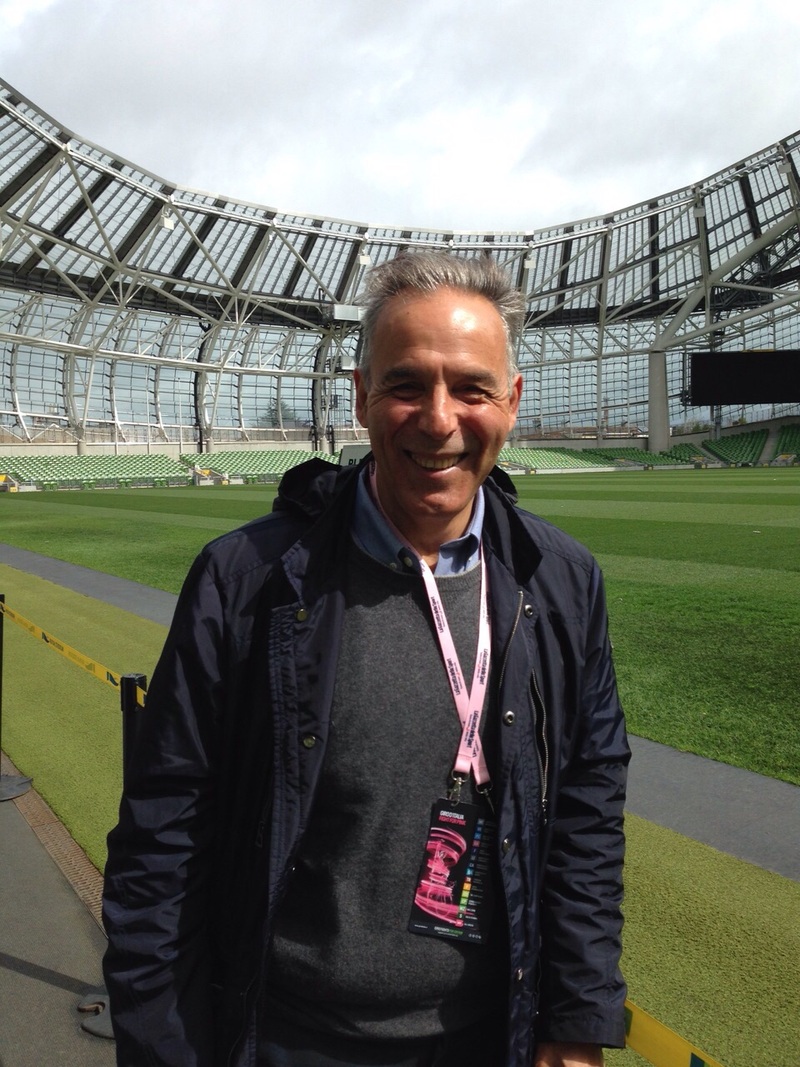
"Where the cameras are connected via land cable we still prefer the triax cable because we at RAI technical team considered it more robust;" So says Enrico Motta, the Project Manager of this production and big events for "Rai Produzione Grandi Eventi" who refers to Dr. Maurizio Ciarnò, Head of Major Events of RAI and also deputy director of TV Production.
"That is principally concerned with the events of greater public success,but when the cameras are operating in the mountains finish stages it is imperative to have the right resources that manage the signals that travel several miles away from the position of the cameras themselves to the tv compound. For example, in the finish stage of Montasio, given the altitude of the stage, the OB-vans stop in the valley, while following the group of cyclists in the mountains, a special fiber optics hub collects all the signals and carries them with seven/eight kilometers of optical links to the TV compound, which is then connected in real time to the finish stage area of the race.
On this fiber optic link are conveyed several signals: all the cameras, intercoms, data for the timings, metadata, audio and everything you need. For those working in the control room it is as the cameras were just outside the OB-Van, since all the signals arrive perfectly and without delays.
Motta points out: "The technology has allowed us to reduce a bit 'the number of professionals involved, at least 10% less than last year, despite the media involved are always many, the TV compound, RAI Sport, RAI radio, the production team, the coordination of the various regional offices; but it is difficult to say precisely where we have saved on the staff because the system is to be seen as a whole.
As a rule, every day we cover three hours of the race live then from 14.30 to 17.30 although sometimes due to the cold and fatigue the race lasts even longer. Giro d'Italia is broadcast on RAI 3, RAI 1 and RAI Sport 1 and all airs for the first time on channel 501 of RAI HD on DTT plus TVSAT platform. Certainly not lacking retransmission streaming on the web which is very rich.
For those who follow the tour from the RAI website (http://www.rai.tv/dl/RaiTV/diretta.html), all the feeds of parallel cameras, can be seen, motor-bike 1, motor-bike 2, helicopter, etc. creating a choice of personal points of view in the house" becoming a sort of director of the race, as already experienced in the last three years.
This year, the streaming quality on the web is significantly higher and there are certainly applications available for smartphones and tablets for viewing on the move.
The fact of having built the optical fiber hub has allowed us to make disappear the copper from our equipment, apart from the power cable! So even the wiring now impacts much less on the beauty of the many local areas the Giro encounters in the various stages."