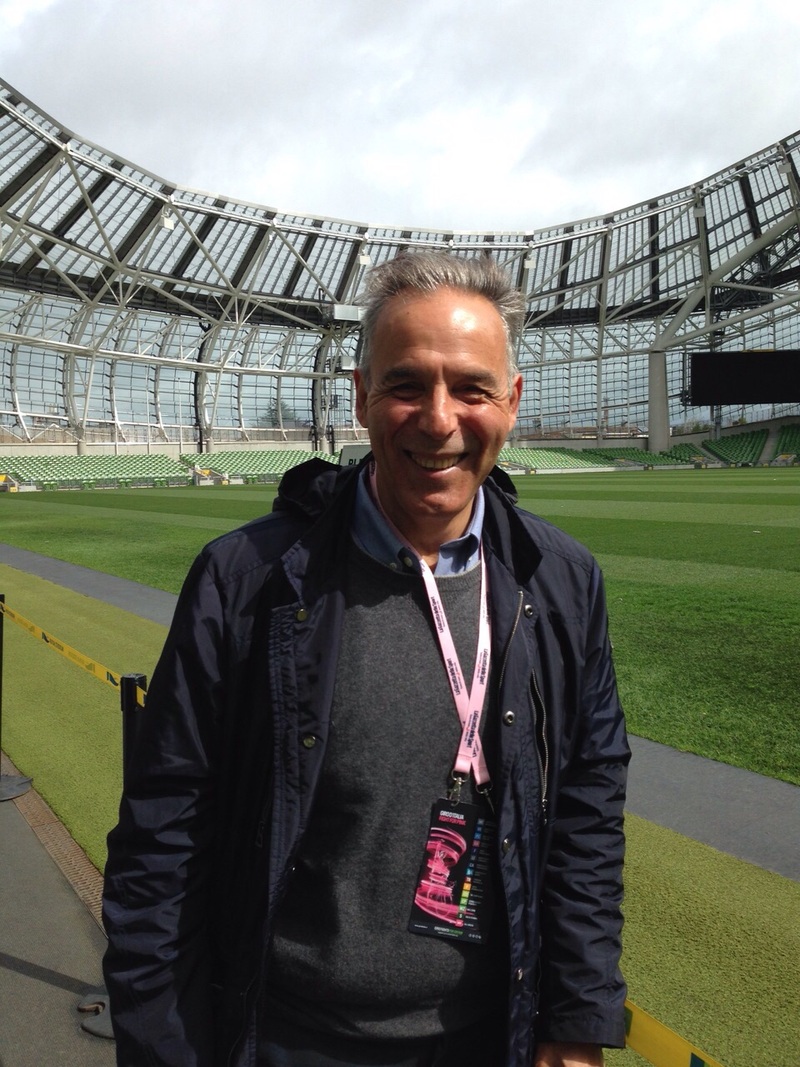
Conversation with Auro Bulbarelli, Vice Director of Raisport and Team Leader of “Giro d'Italia”
Over 200 hours of live broadcasts for the 94th edition of “Giro d'Italia”, through the experience of sports editorial office of Raisport. From May 7th to 29th, tens of professionals every moment of the “Corsa” was followed live. The several tv programmes aired were “Si Gira”, “Aspettando il Giro”, the live event, the “Processo alla tappa”, “TGiro” and “Giro Notte”. Rai3, Raisport 1 and Raisport 2 were the channels thoroughly devoted to follow the event in every detail to anticipate and amplified the information and curiosity on the event organized by Italian newspaper “Gazzetta dello Sport”.
Since 2009 Auro Bulbarelli is Vice Director at Raisport delegated to “cycling” and after ten years of first line as a tv commentator, together with Director Eugenio DePaoli, he had to chose the team destined to follow every cycling race that RAI had acquired and diverted on the two sports channels available, Raisport 1 and Raisport 2.
Both are devoted to sports, received on the whole Italian country via terrestrial digital transmitters and on the rest of the footprint of Hot Bird satellites, dedicating several of the available playlist hours right to cycling races.
Bulbarelli on such matters declares: “Both for passion and profession, but never in the past we reached so many hours of cycling on RAI. Actually the two main Italian historical tv broadcasts are the “Festival di Sanremo” and “Giro d'Italia”.
This year the “Giro” edition was completely realized with internal forces, within RAI, but the hire of the helicopters used for all broadcasts to the control rooms.
The main challenge was for us the switch from analogue tv production to digital, along with new tv cameras, and we made a lot of efforts. But the next leap is towards high definition transmissions, probably within next year. But to be honest the real issue of the shooting and tv techniques in general for the Giro d'Italia -if compared to the “Tour de France”- is the orographic feature of the landscape.
Actually Italy is a very difficult landscape to be followed along the race and all its many segments, since the tv tech crews are constantly faced -and in the same day and the same lap- by difficulties in handling segments on the hills, then on the mountains, and again at the seaside, often with fog, bad weather, or under a torrid sun.
The period in which this famous race, the “Giro”, is held is May and not July, so meteorological conditions are crucial for the results and final images quality.”
In the last two or three years the big leap forward has been in the conversion of radio broadcast signals of the cameras which are now completely digitized both in the uplink and in downlink, from the studio to the helicopters and viceversa; all this was a real challenge which lead RAI to heavy investments.
And to report every leap, a giant but modular organization was setup to follow everything, from the daily live event to the daily reports, a tech structure headed by project leader Enrico Motta, and by Production responsible Riccardo Managlia. This machine had to be created to reply several complex needs involving a total of 20 tv cameras, slow motion, motor cycles shooting, helicopter images, digital radio links, moving control rooms to be assembled and disassembled as required at the arrival, amidst city roads and squares and crowds at every leap ...
More technical details to come.

Sports & News Broadcast
Giro d'Italia 2011, an all-RAI tv “product”
Related Articles

Ultimissime di Tutte le Categorie
-
Marzo 2026
- ZEISS presenta la nuova serie di ottiche cinematografiche ZEISS Aatma 17:03:26
- Mimir, speciale NAB 2026 gestione completa media in cloud 16:03:26
- Sonnet Technologies Speciale NAB Show 2026: workflow professionali broadcast, video e post 16:03:26
- Meinberg: il lancio di microSync THR – innovazione nella sincronizzazione del timing 14:03:26
- NAGRAVISION per l'offerta offerta pay-TV di OSN 15:03:26
- OSNtv lancia su Smart TV Samsung un servizio pay-TV senza set-top box basato su HbbTV Operator Application 15:03:26
- DoPchoice, sistema di modellazione della luce SNAP RABBIT Octa 5 SNAPBAG® 14:03:26
- Groupe Novelty a ISE 2026 insieme a Naostage 14:03:26
- Sipradius connettività cloud, gateway di distribuzione streaming semplificati 13:03:26
- SmallHD rilascia un importante aggiornamento di PageOS con Portrait Mode, Fleet Control e nuove funzioni di controllo camera 13:03:26
- Bitfocus presenta nuove funzionalità enterprise per il controllo degli show a ISE 2026 12:03:26
- Glensound: nuove soluzioni audio su rete, interfacce Dante e sistemi intercom per broadcast ed eventi live. 11:03:26
- Calrec al Nab 2026, audio professionale indipendente dalla location 10:03:26
- LiveU ha realizzato il primo deployment globale su larga scala della tecnologia AI LIQ ai Giochi Invernali 09:03:26
- Embrace, LucidLink e Iconik presentano una pipeline media cloud 08:03:26
- Boland Communications presenta al NAB Show nuovi display OLED e applicazioni per video wall 07:03:26
- LucidLink Connect: i dati al lavoro ovunque essi siano 06:03:26
- SuiteLife Systems e Axess, piattaforma per monitoraggio e controllo di infrastrutture broadcast 05:03:26
- Qvest Road to NAB: Think beyond technology 04:03:26
- AVEQ presenta Surfmeter al NAB Show 2026 03:03:26
- PROVYS Technologies e CVE Italy, accordo di distribuzione: eccellenza globale nel Management Broadcast 02:03:26
- Signiant presenta la soluzione Control & Visibility e rafforza l’indipendenza di storage 01:03:26
-
Febbraio 2026
- RTS NOMAD Wireless Intercom: A New High-Performance Platform for Critical Communication 28:02:26
- Disguise e ASB GlassFloor partnership: campi sportivi ora piattaforme digitali interattive per pubblico, squadre e sponsor. 27:02:26
- FOR-A Europe presenta soluzioni per la convergenza broadcast e Pro-AV a ISE 2026 26:02:26
- Dot Group con GreenDot a ISE 2026 per la gestione della sostenibilità 25:02:26
- Christie Sapphire® 4K40-RGBH: proiettore 4K con illuminazione RGB pura 24:02:26
- Cinegy presenta soluzioni broadcast per il mercato AV professionale a ISE 2026 23:02:26
- CJP Broadcast: infrastruttura media a bordo campo per Cinderford RFC 22:02:26
- CVE Open House: "Produzione Live e Remote Production nell’era del Private 5G" 21:02:26
We strive for accuracy and fairness. If you see something not feeling right please let us know

Siamo molto sensibili ai cookie. We don't track, we don't trace, we don't advertise, and we don't try to get on your nerves. Ma il webmaster dice che per ragioni tecniche ci vuole un cookie per sessione; e l'avvocato dice che per ragioni legali dobbiamo sottolinearlo. Quindi per proseguire è meglio se clickate sul pulsante a destra >>>